


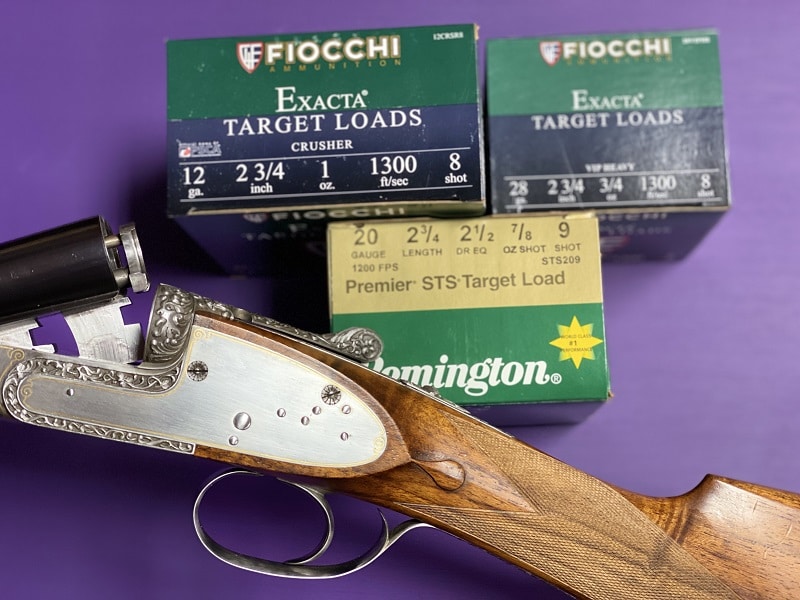
There have been thousands upon thousands of words put in print about the gauge of the shotguns you should shoot if you choose to shoot shotguns at all.
My first gun ever was a shotgun. I was 15 or so. My father purchased it for me at Blicks’ Sporting Goods on Tejon Street in Colorado Springs, Colorado. I was at Fountain Valley School at that point in my life and they had started a trap shooting club. It was a Remington Model 1100, semi auto 12-gauge. I shot it for years and still have it today.
As I became older and hopefully wiser, I ventured into different types and styles of shotguns, predominately over and under style. For a long time, they were all 12-gauges with a brief, very brief time with a 4-gauge skeet set up. I only shot the 12- and 20-gauge barrels.
Fast forward to several years ago. I was talking to a friend and gun designer, Karl, who explained to me that the 20gauge of today might have as much efficacy as the 12-gauge due to the advancements in powders and metallurgy of the shot. I was stunned!
Most average American males believe that bigger is better, therefore the 12-gauge is the most seen shotgun in the states. I thought that for years, but do not forget I grew up shooting a 12-gauge semi-auto. A semi-auto equates to less recoil.
I started shooting again with an over/under 12-gauge. I ended up with a bruised shoulder from the recoil the FIRST day. Then I tried a 20-gauge, it was bit better, but I decided to try a 28- and .410-gauge. The .410 – well let us just say I stink!
The 28-gauge I can shoot all day long and then some. I fell in love so to speak! The main drawback to this choice is the cost of the shotgun shells. I will take that over a bruised shoulder anytime. See a more refined and detailed overview by Chuck Hawks, “The 28 Gauge: The Little Shell That Could”.